A revival of the ancient Irish hard cheese tradition using A2 milk
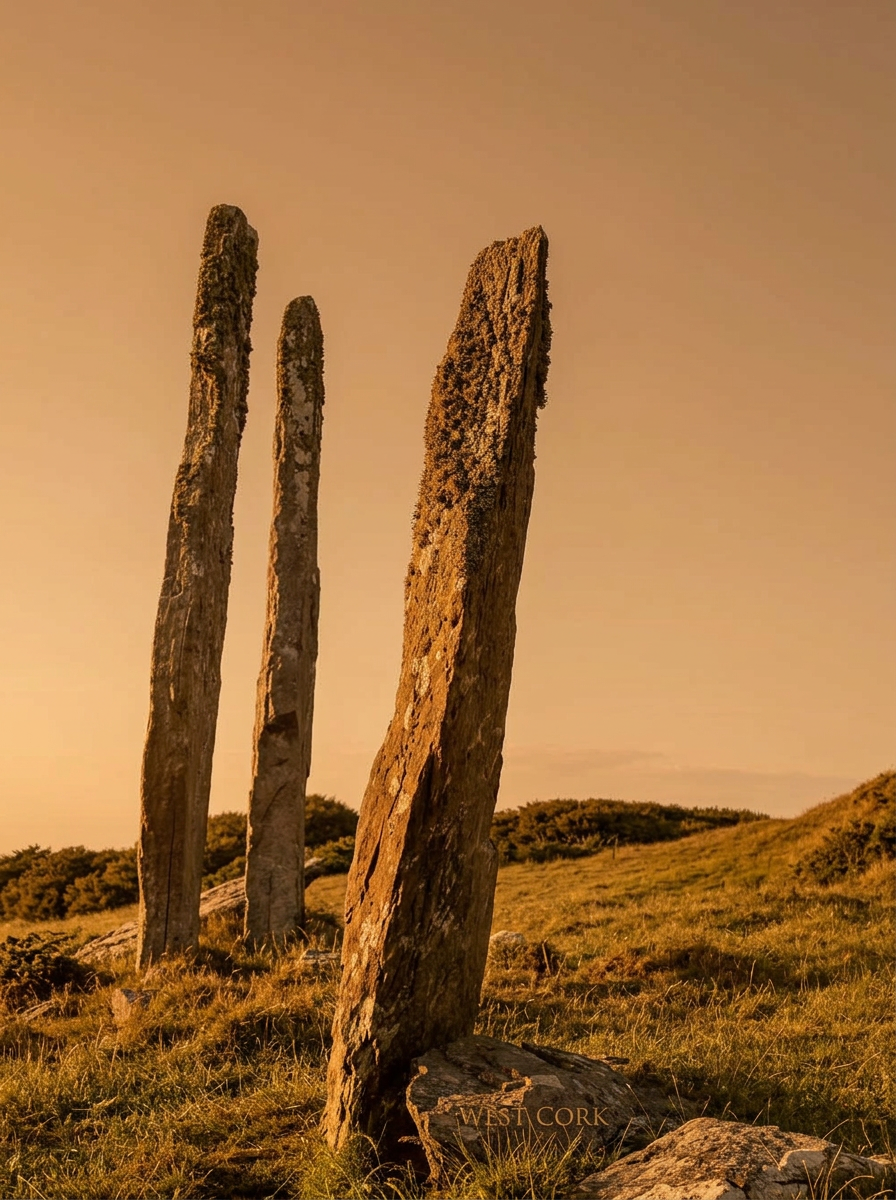
High on the ridge of Castletownshend stand the Three Fingers an ancient stone sentinels aligned to the Bronze Age sun. The land they watch over has fed cattle for more than three thousand years. Our cheese is a revival of the white meats of old, made in the native Irish hard cheese traditions of Tanach and Grus aged by the seasons, pressed by hand and rooted in the soil that made it.
The Cheese
Three Fingers is a new Irish farmhouse cheese, made from the milk of a single herd grazed on the hills of West Cork. It revives two native Gaelic hard-cheese traditions:
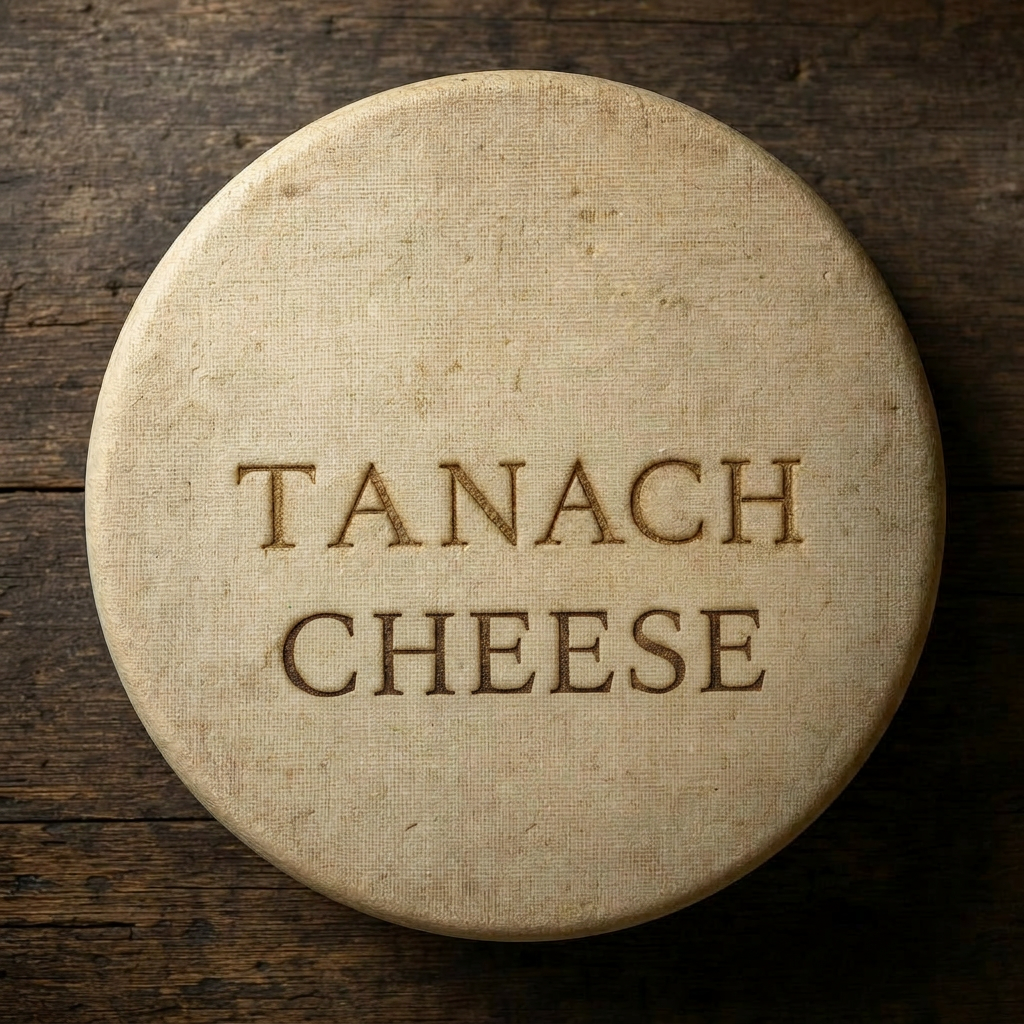
Tanach is the younger wheel, pressed, brined, and aged for two to three months. Firm, milky, lightly grassed, with the clean finish of a young pasture cheese.
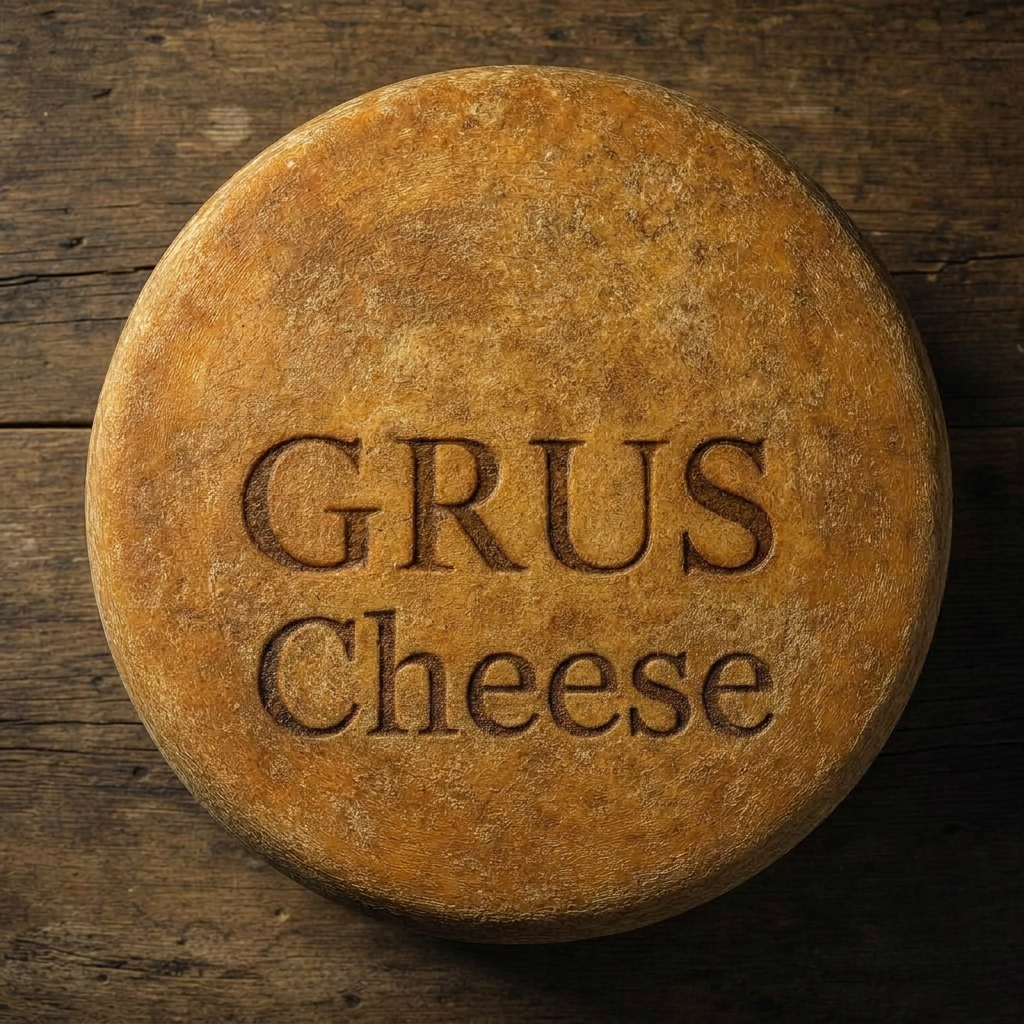
Grus is the long-aged wheel, washed-rind, turned by hand, matured for twelve to eighteen months and beyond. The interior develops the brothy, nutty, faintly piquant character of a true hard cheese, with the long finish of a milk bred deliberately for the purpose.
Both are made in twenty-five kilogram wheels, from A2 milk, by the tenth generation of our family to farm this land.
The Place
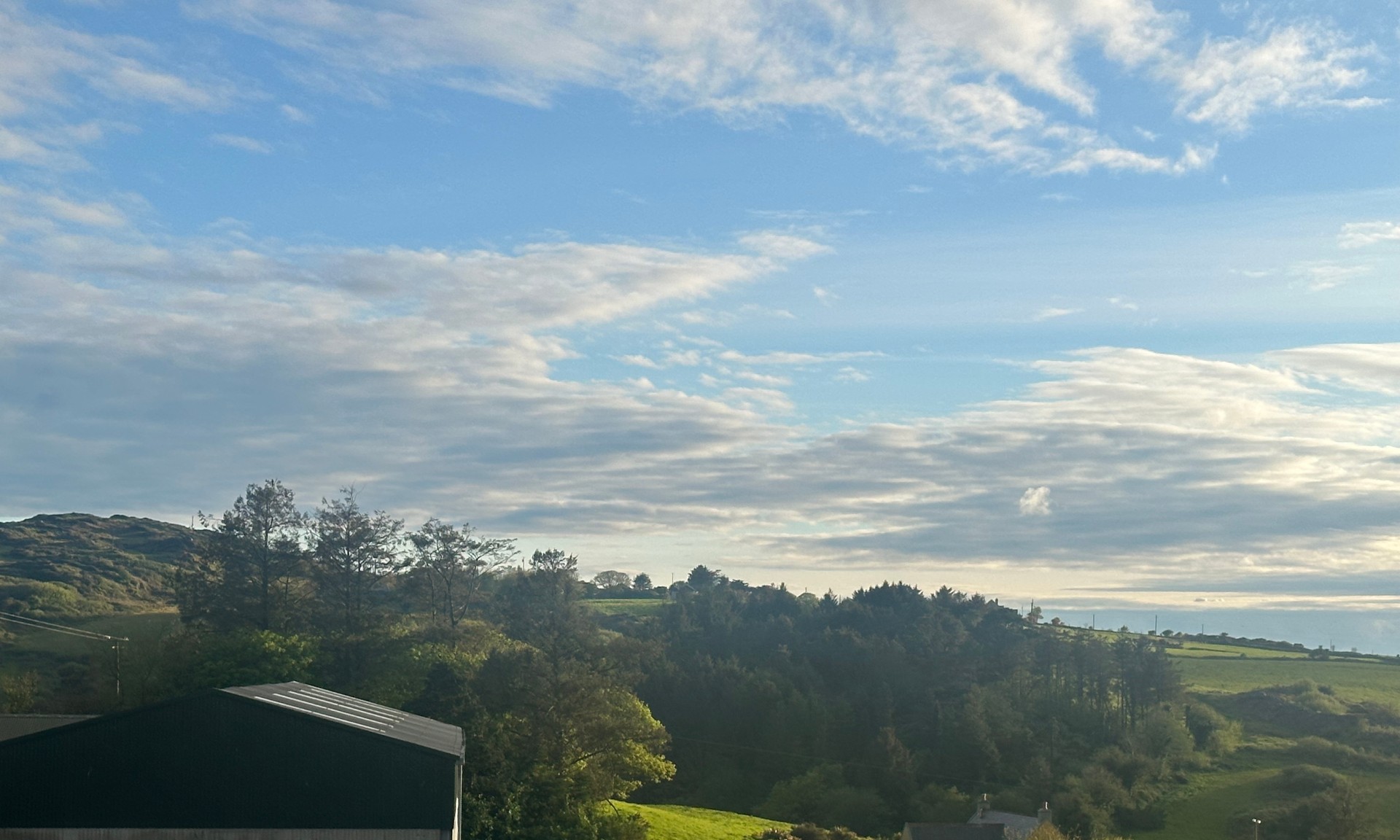
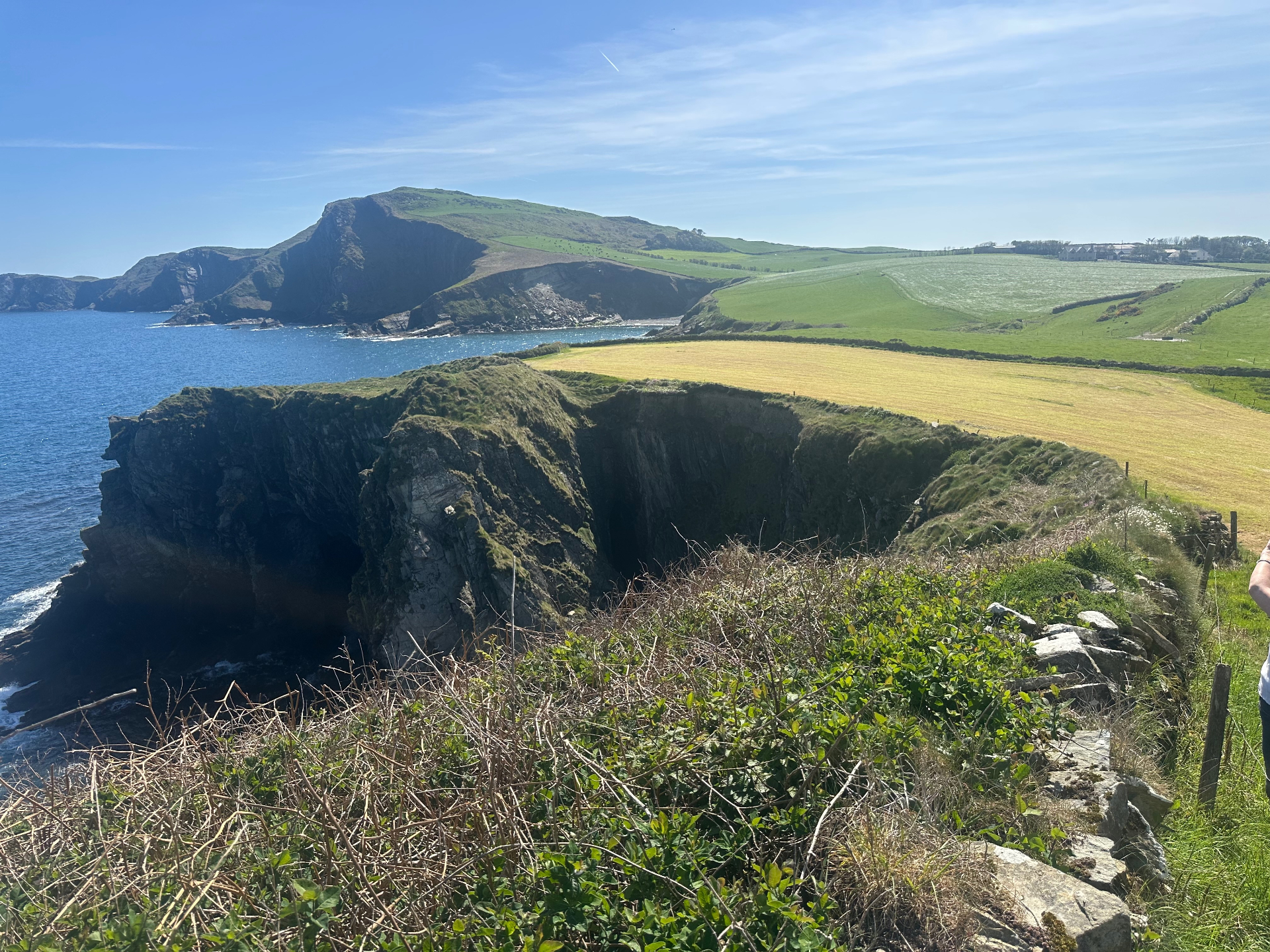
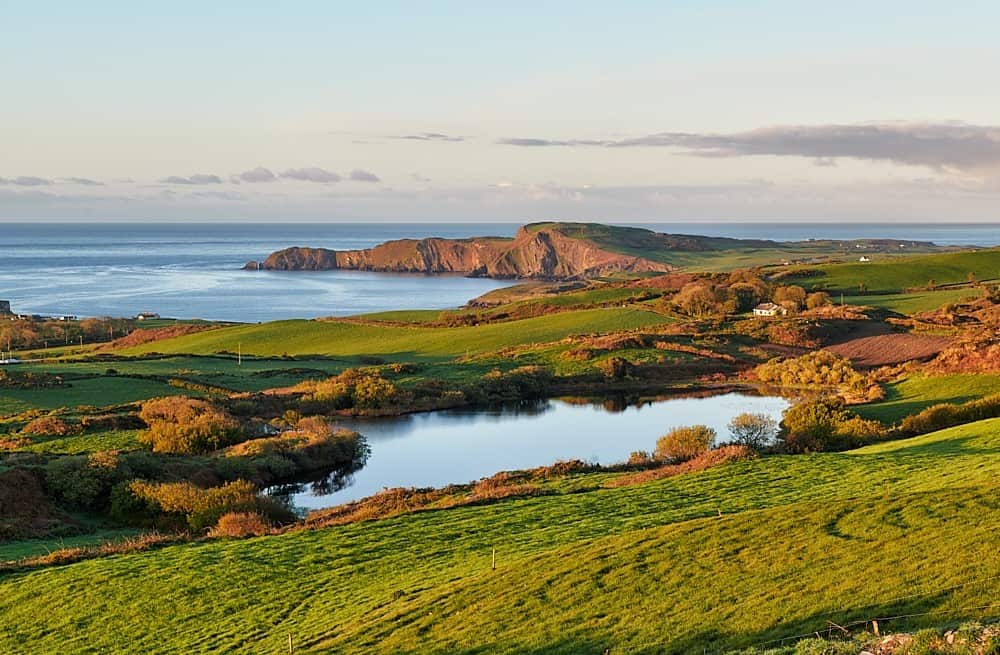
Castletownshend sits on a peninsula at the southern edge of a landscape farmed continuously since the Neolithic. The Three Fingers themselves, three weathered limestone uprights, sit a short walk from the dairy. They are between three and three and a half thousand years old, aligned with Bealtaine and Lughnasadh in the ancient calendar: a gunsight for prehistoric farmers marking the turn of the grazing year.
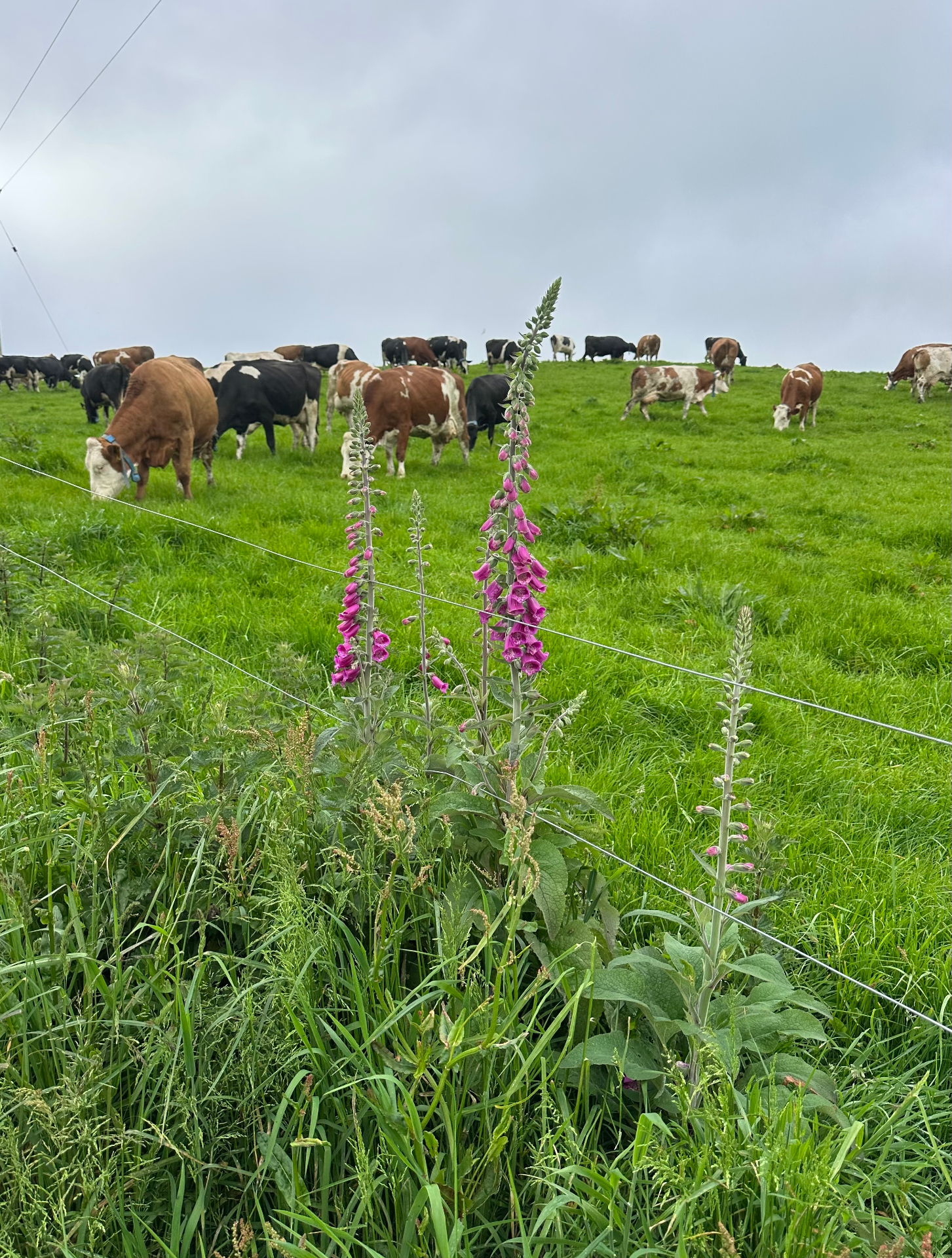
The pasture they stand on is the same pasture that cows still graze today. The Atlantic surrounds the peninsula on three sides, and the salt-laden wind never lets go, and even the trees grow sideways. The cheese carries something of all of it. The landscape is dotted with ancient ring forts ever reminding us that are not the first to produce pure food from this rugged corner of the world. The wild landscape engraved on the faces of those that farm it.
})
The Cows
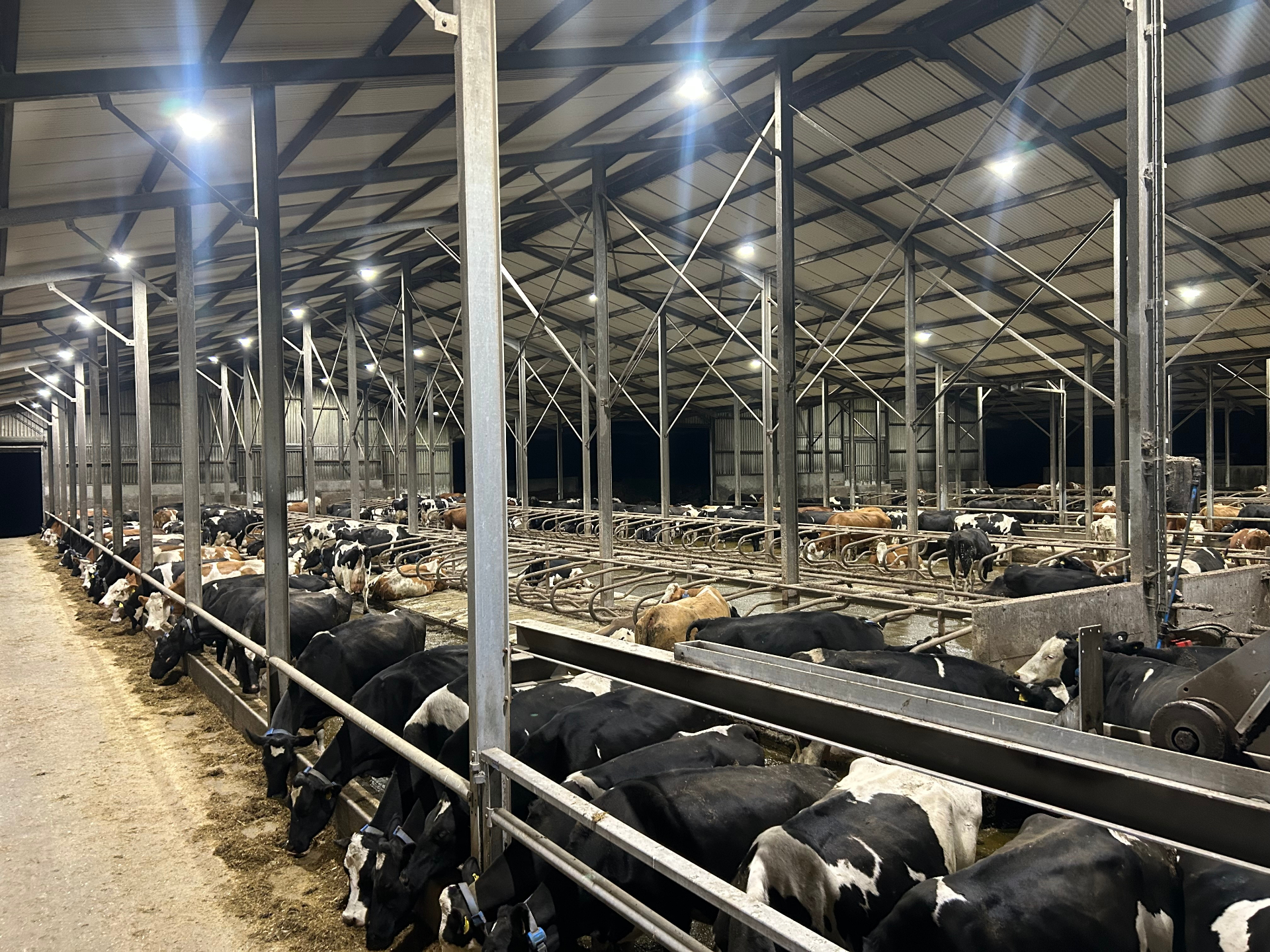
Three Fingers is a modern family dairy herd with family and employees jointly doing the work. This structure gives us the time to put into the cheese business, We focus heavily on welfare and cow comfort, the discipline of running a herd to the standard we set ourselves is real work every day, and there is a great deal of it, but one of the reason we do this at all, is we love our cows. One of the finest things in the world, is to stand at a gate and listen to the herd graze, or to lean on the feed barrier and watch them eat and chew the cud in contentment.
Our shed is built for them, not for us. It has comfortable cubicles, generous lying space, clean lying area, automatic robotic scrapers, fresh water and ad-libitum forage at the feed face, this comes at a financial cost but a cost we believe is worth paying. They come in dry and they leave dry, they are housed when housing is the kindness; they are out when out is the kindness. The herd decides more than the calendar does. We do not get it right every day although we try to, and we are honest with ourselves on the days we do not and learn from it. The cows are grazed on the hilly fields when the weather and the ground allow it. We have many mild months in West Cork, and we have a great deal of rain, and every year is different. When the weather turns, they come indoors; when it turns back, they go out again. We do not force cows onto wet ground in February to satisfy a calendar, or to satisfy a sound-bite from a marketing executive three hundred miles away. We do not turn freshly-calved cows out into the cold to chase a grass-curve. We farm the way we believe is best for the cow. Some years she will eat more grass; other years more silage, or more meal. What matters is that she is cared for. A cow that has just calved is at her most vulnerable, and the early weeks of her lactation set the tone for the whole year. We feed her and care for her, and she feeds us and cares for us, through the quality of the milk that becomes the cheese. This is farming in its purest sense: mutual care.
A cow under quiet, steady conditions produces quiet, steady milk. The composition of that milk, its protein, its fat, its casein structure, is the foundation of every wheel we press. There is no version of this cheese that begins with a stressed cow.
The A2 Milk
The herd has been bred for six years toward a specific genetic profile: kappa-casein BB, the gold standard for hard cheesemaking, and the A2/A2 beta-casein variant, the milk that the cattle of the Bronze Age would have produced. The same genotypes prized in the Comté, Beaufort and Gruyère traditions of the high Alps, expressed here in a herd grazed within sight of the standing stones.
The milk runs at 3.7% protein and 4.3% fat, materially above the Irish co-op average, but we adjust the fat for the cheese. There is no pooling. Every wheel of Three Fingers carries the signature of a specific make day from a single herd.
The Make
The old Irish hard-cheese tradition is not a recipe we can copy. The makers of Tanach and Grus left no written method. What survives is the language, the names of the cheeses, references in the law-tracts and the early manuscripts, the place of cheese in the household and the tribute. The technique itself was carried in the hands of the women and men who made it, and the technique has been lost.
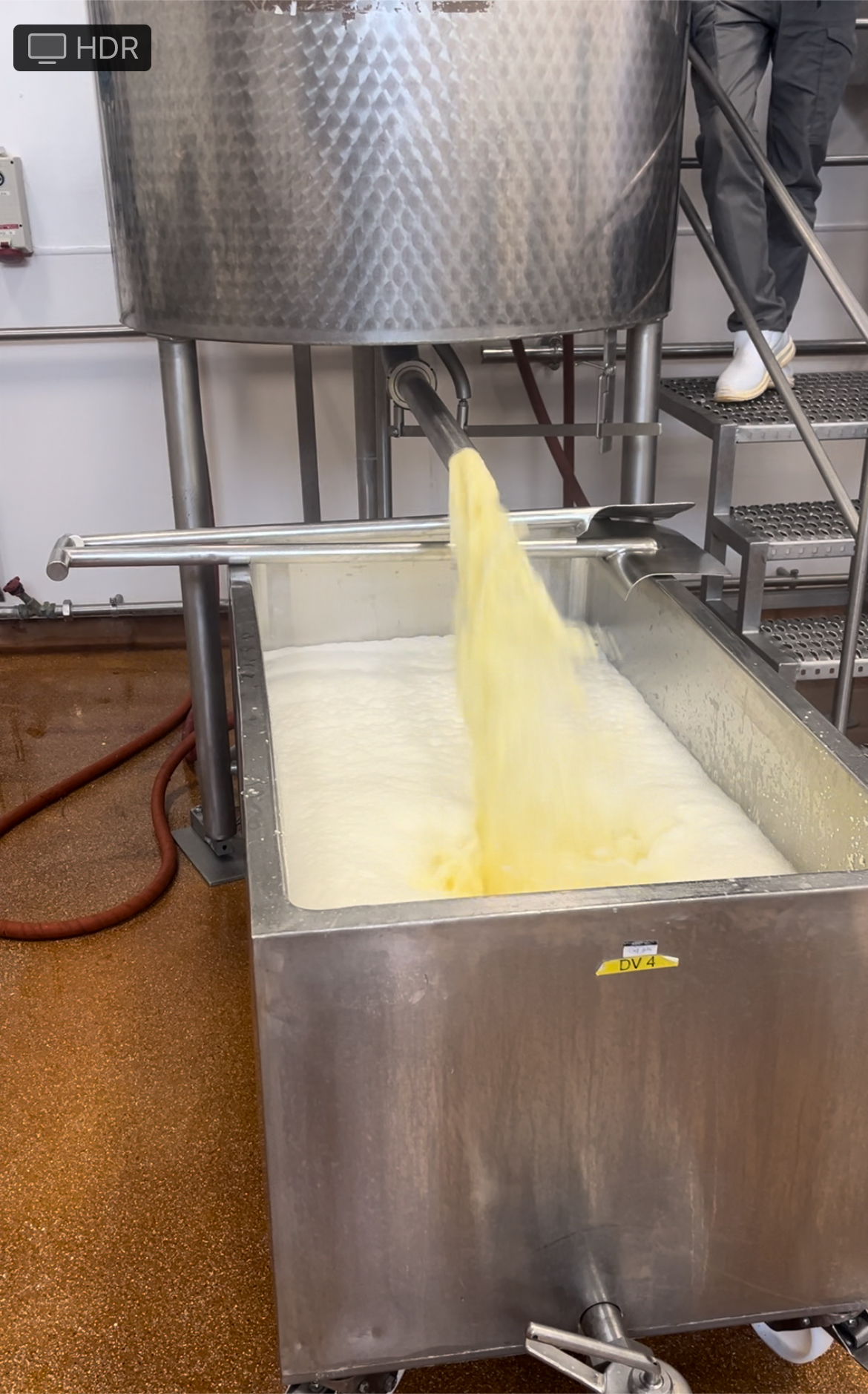
What can be reconstructed from the texts and the archaeology is the shape of it. The milk was lightly skimmed for butter. Butter was tribute, currency, and the long-keeping fat of the household, and the part-skimmed milk that remained, lean and high in protein, was set with rennet, scalded over residual heat, wrapped in linen or woven grass, and pressed under heavy stones in a shallow wooden dish. The pressed wheels were salted, hung in the rafters or laid on wooden racks, and left to harden through the winter and beyond. A cheese built for time. A cheese that could feed a household through a hungry spring, pay a tribute, or be carried on a journey of many days. A cheese the Bronze Age herder, working a herd not unlike our own on ground, would recognise.
Three Fingers is the work of meeting that intention with the tools of modern dairy science. We do not pretend to know what they did. We are confident in what they were reaching for, and we believe we can honour it as well as it has ever been honoured, and quite possibly better.
The principle that runs through every choice we make is this: the same instinct, sharper means. Consider the milk itself. Our cows are bred toward a high-protein, high-fat profile suited to long-aged hard cheese, and we lightly skim that milk before the make, as the old tradition did.
A new two-thousand-two-hundred-and-fifty square foot make room is built and powered. Pilot batches have been tested at the Moorepark Technology Centre in Fermoy. The equipment is sourced and waiting to be installed. The Department of Agriculture audit is underway. What remains is the final commissioning of the line and the fitting of the affinage cave.
The Family
The surname Ó Buachalla means herdsman. The family is the tenth generation to farm this ground. The roots could not be deeper.
Three Fingers is the work of Donal Buckley and Alan Gilbert, Irish, European and US educated in business, food and agricultural science, and three decades of work across the food and energy industries in more than forty countries, they know a little about flavour and culture. The intention has always been to return to food production on this the ancient land.
The Founders' Cellar
A small number of forward allocations are open to founding patrons of the cheese. The Founders' Cellar is a programme of named, multi-year wheel allocations from the inaugural makes, with farm access and a place in the cellar register. Places are limited and offered by request. Come and enjoy the journey with us!